


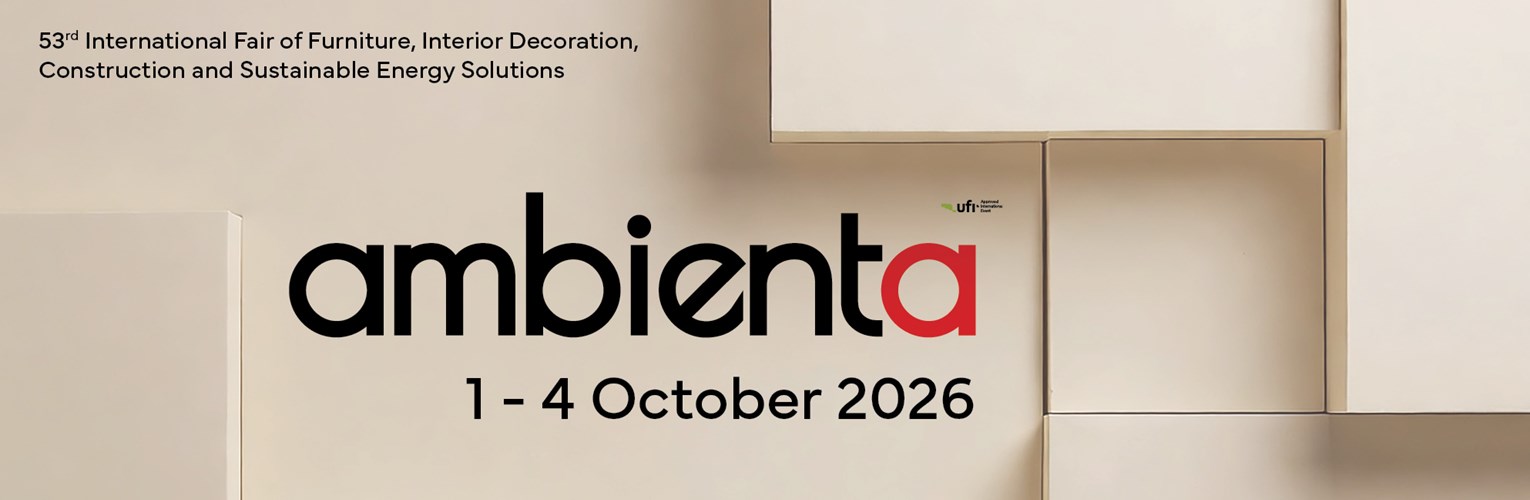

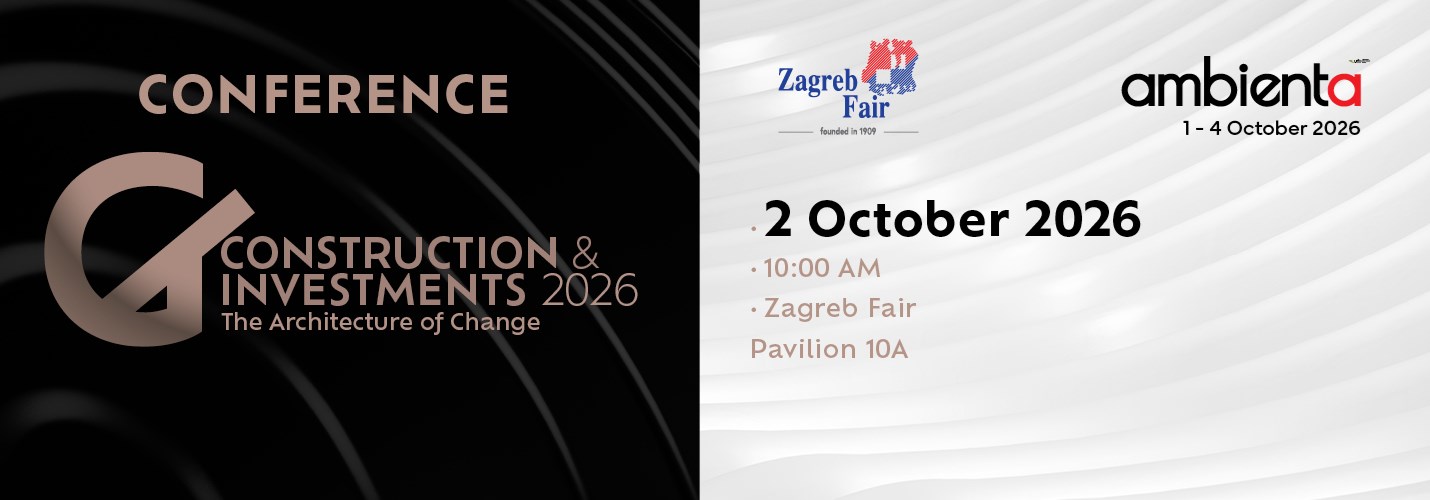


Following last year’s successful step forward, Ambienta once again becomes the central meeting point for leaders shaping our built environment, connecting the furniture industry with key segments of construction and investment. The main professional event of the Ambienta Fair, the conference “Construction and Investments 2026: The Architecture of Change”, will take place on 2 October.
About the Conference
The construction sector is currently undergoing a period of significant regulatory and technological changes. It is no longer enough to plan solely through the lens of built square meters; today, market survival and the value of investments directly depend on the application of the EU taxonomy, digital transformation and the integration of social infrastructure into residential projects. The Conference “Construction and Investments 2026: The Architecture of Change” brings together representatives of public administration, financial institutions, investors, architects and construction experts to address concrete challenges in spatial development.
Thematic areas and panels
The programme encompasses four key panels:
- Designing Human-Scale Neighborhoods - Balance of Profit and Public Interest: Discussion on a new era of urban planning in Zagreb, focusing on stricter rules for green spaces and the mandatory construction of social infrastructure such as kindergartens and schools.
- ESG and EU Taxonomy - Who Will Finance Brownfield Construction: Analysis of the impact of high environmental standards on interest rates and access to capital. The panel will address the risk of stranded assets (buildings losing value because they are not “green”) and the costs of implementing certifications such as DGNB.
- The Digital Path to the Construction Site: E-Permits and the Removal of Investment Barriers: Exploration of the path to a paperless construction site through the system of e-Permits, digital twins and BIM technology that reduces maintenance costs.
- Architecture as Capital - Aesthetics Delivering Return on Investment: A discussion demonstrating that high-quality design is not a cost, but a key competitive advantage that increases real estate value and prevents the “apartmentization” of design.
The conference serves as a platform for the exchange of operational information between legislators and the private sector, providing participants with direct insight into new legal frameworks for spatial planning and current financing conditions for sustainable construction. In addition, the programme includes practical methods for increasing construction site process efficiency through the use of modern digital tools.
ZAGREB FAIR, Ltd. | Avenija Dubrovnik 15, 10020 Zagreb, Croatia | OIB: 95660678441 | IBAN: HR2423600001102657817
Tel: +385 1 6503 111, Fax: +385 1 6520 643, e-mail: zv@zv.hr | Management working hours: 7.30-8.30 AM - 3.30-4.30 PM


Copyright © 2026 Zagrebački Velesajam d.o.o. All Rights Reserved

